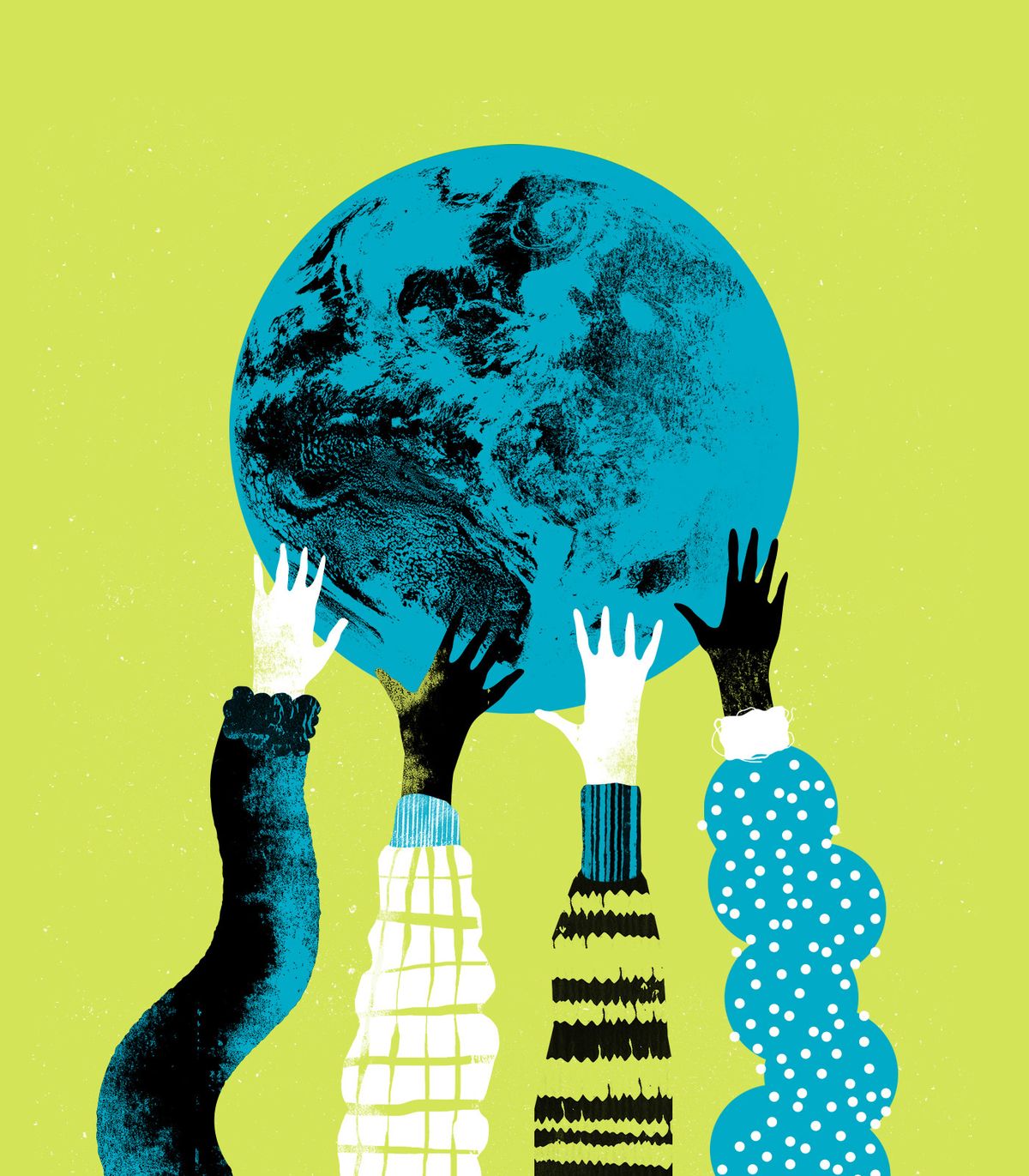
Never before have humans been so aware of each other’s pain. A single image, video, or story can travel across continents in seconds, turning distant tragedies into shared experiences. While governments and institutions continue to fail those most in need, ordinary people are paying attention, speaking out, and standing together. In this globalized digital age, silence is becoming harder to maintain, and a new humanitarian consciousness is beginning to emerge.
Humanitarian crises are no longer rare or distant events. From Rojava to Gaza, from Ukraine to Sudan, civilians continue to be victims of conflict and pay the highest price for political conflicts they did not choose. International institutions often issue statements of concern, yet real protection and justice remain limited. Families are displaced, children grow up surrounded by fear, and entire communities are left to survive without safety, stability, or justice. Behind every headline are real people whose lives are being permanently changed, and this is what matters most to pay attention to in our globalized time.
One painful example is the experience of the Kurds in Rojava. For the people living there, this was not a matter of strategy or diplomacy, but a matter of survival. Homes were destroyed, families were separated, and lives were lost. The human cost of these events cannot be reduced to political decisions; it is measured in grief, trauma, and lives cut short.
What followed, however, revealed something deeply meaningful. While official support faded, people around the world refused to look away. Activists, journalists, and ordinary individuals shared the stories of Rojava online. Protests were organized, messages of support spread, and global conversations began demanding that the suffering not be ignored. Many who had never heard of Rojava before came to understand the pain and resilience of its people. This collective response reflected not only political awareness but a deep sense of shared humanity. It showed that even in moments of great loss, people can come together to protect one another and keep hope alive.
This kind of solidarity would have been nearly impossible in the past. Today, people on the ground can share videos, photos, and testimonies instantly. The victims of injustice are no longer invisible; they speak for themselves.
The internet has transformed the way humans relate to each other. Distance has lost much of its meaning. A protest in one country can inspire another on the other side of the world. Through social media, human suffering feels closer, more personal, and harder to ignore.
This digital connection has created a sense of shared responsibility. People no longer see humanitarian crises as someone else’s problem. Instead, they see faces, names, and stories. The pain of others becomes emotionally real. This is one of the most significant changes of our time.
Perhaps this is what a global awakening truly looks like. Not a perfect world free of suffering, but a world less willing to accept cruelty as normal. A world where people refuse to be fooled, refuse to be silent, and refuse to forget. Even when voices do not immediately change outcomes, they change something just as important: the truth.
Even in a world marked by so much loss, there is still reason for hope. The same global connections that expose suffering also create the possibility for a better, more caring response. At GFTL, this hope takes a concrete form. By building trust, transparency, and accountability in giving, we help ensure that compassion is not wasted and that support truly reaches those who need it most. In doing so, we contribute to a global system where solidarity is not only felt in words and posts but strengthened through real, visible impact. This is how a globalized world, despite its pain, can also become a more humane one.
In speaking, sharing, and standing together, humans affirm a simple but powerful idea: that no struggle is invisible, and no suffering is insignificant. In that sense, the world is more awake than ever before.
Authored by: Mariam Saud Ahmed